
Interactive climbing wall
A room-based climbing challenge where illuminated, touch-sensitive holds guide the route. Combine physical movement with colour recognition in an indoor active-game venue.
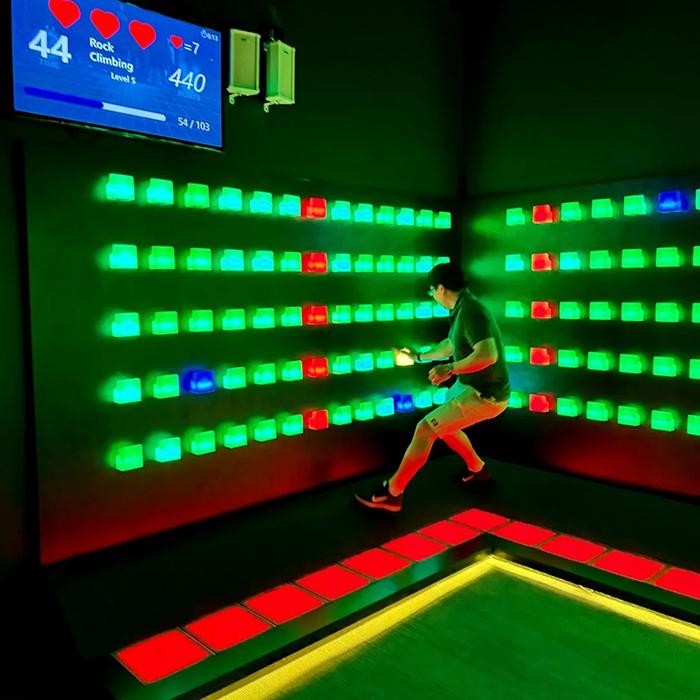
Example from the product handbook. Final room, equipment and safety requirements are project-specific.
How the experience works
Players traverse a wall of interactive LED holds and respond to colour cues while completing a route. The handbook describes solo and multiplayer formats and a rule that players avoid touching the floor during the course. The selected content defines permitted holds, progression and finish conditions; these should be demonstrated before the configuration is agreed.
Where it can fit
Consider a dedicated challenge room in a family entertainment centre, an indoor adventure venue or a multi-room active-game concept. Choose it when a traversing activity complements floor, target and throwing games. Audience suitability, access and the number of simultaneous players need to follow the reviewed design, rather than an assumed capacity.
Before you specify the room
Share a dimensioned room plan, usable wall lengths, ceiling height, wall construction and site photos. Identify columns, doors, equipment delivery access, waiting space and staff sightlines. The support structure, fixing design, fall protection, movement envelope and emergency exit arrangement require a project-specific engineering and safety review.
What is shown in the configuration
The source configuration shows illuminated climbing holds, a wall-mounted play area and a score display. Its game formats include static climbing, more advanced traversing challenges and a racing format. Request the current mode list, controller and display scope, hold layout, spare-parts list and operator demonstration as part of the quotation. A catalogue example does not specify every supplied component.
From room drawing to daily operation
Separate the playing area from briefing and waiting areas. Discuss how players enter, restart and leave, how staff stop a session and how holds are inspected and cleaned. Set the supervision and inspection plan with the venue and installer before handover. Throughput, session duration and staffing should be based on the approved modes and an operator trial.
What makes the proposal useful
Tell us whether this is a new venue or a refurbishment, your country and city, target audience, intended opening date and the surrounding activities. Add the room drawing and your preferred project scale. The proposal can then identify the climbing scope, connected software requirements, installation responsibilities and documentation to confirm before purchase.
Questions before you buy
Is this a conventional high climbing wall?
The handbook illustrates a colour-led traverse across illuminated holds. It does not establish a universal height, rope system or approved fall-protection design. Ask for the dimensioned selected configuration and its safety documentation before deciding how it fits your venue.
Is 6 × 4 m the minimum room size?
No. It is the handbook example, approximately 24 m². The finished wall, clearances, access and supervision space can change the required plan. Send your drawing for a review rather than choosing a room by area alone.
Can climbing form part of a larger game venue?
Yes, it can be considered alongside an LED floor, reaction wall or other challenge room. The Pro or Flagship brief should define the player journey, shared software scope and separation between activities.
What determines the climbing quotation?
The chosen hold layout and content, room preparation, structural and safety requirements, controls, display, software and destination delivery all affect scope. Pricing follows review of these requirements; the example footprint is not a fixed package.
Choose your project scale
Plan one climbing experience with Starter, complementary rooms with Pro or a venue-wide game mix with Flagship. Each option is a scope discussion, with the structure and safety plan reviewed for your site.
Product information: CYDON product handbook, page 13. Reviewed 1 October 2026.