
Interactive reaction wall
Timed light-target challenges built around touch, coordination and friendly competition. A compact experience for a dedicated room or an activity zone.
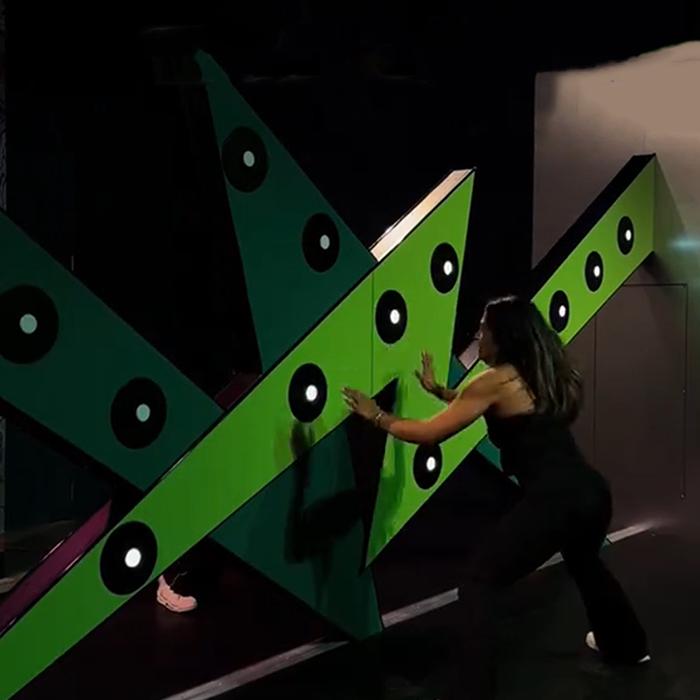
Example from the product handbook. Final room, equipment and safety requirements are project-specific.
How the experience works
The handbook describes a timed one-on-one challenge: players touch illuminated buttons and compete on score. Confirm the selected game modes and scoring rules in the project specification.
Where it can fit
Entertainment venues, supervised movement activities and sports-training spaces where the selected game is appropriate. Training outcomes require an agreed protocol; a game score is not a clinical or professional assessment.
Before you specify the room
Review mounting, target reach, clear movement space, suitable game difficulty and reset procedures. Make room for the operator and define how waiting players enter and leave.
Touch targets, throwing wall or LED floor?
Choose the player action before choosing the equipment. The reaction-wall example in the CYDON handbook uses illuminated buttons: players press the lit target in a timed competition. The throwing-wall example uses a ball to hit selected hexagonal targets, while the GRID floor uses pressure-sensitive tiles for movement and colour challenges. These are different game formats, not interchangeable specifications. Start with the audience, whether you want a touch, aiming or whole-room movement activity, and how the operator will explain and supervise it. Ask to see the exact games proposed for your room rather than treating a product photograph as a complete content list.
Plan the wall, player reach and waiting space
The handbook illustrates a 5 × 3 m room, approximately 15 m². This is a room example, not the wall's dimensions, a minimum lease area or an approved maximum player count. Provide usable room and wall measurements, clear height, doors, wall construction and site photographs. Mark movement space, operator sightlines, maintenance access and the route for waiting players. Ask for the proposed target layout and fixing requirements, then have the site-specific mounting and electrical requirements reviewed by the responsible project professionals. Confirm how the selected layout suits the intended audience's reach; do not infer age suitability or accessibility from the illustration.
Ask the demo to show a complete session
Have the supplier demonstrate the selected game from operator start to player briefing, target interaction, score display, reset and the next session. Check targets at different positions and ask how missed, repeated or simultaneous touches are handled under the agreed rules. Record the modes, scoring behaviour and demonstration results in the proposal or acceptance plan. A video or an entertainment score does not establish a response-time guarantee or a validated sports assessment. Confirm the content catalogue, language options, update terms and restart procedure for the selected configuration. Features described elsewhere in the platform must be confirmed for this product and project.
Compare the same equipment and service scope
Request an itemised list of target modules, controller or computer, score display, software and other proposed components, with model names and quantities. For mounting, room preparation, cabling, commissioning, operator training, spares and ongoing support, mark each item included, excluded or unconfirmed and identify who is responsible. Confirm content rights, licence duration, recurring charges and what remains usable when an update or support term ends. Compare proposals for the same room and operating brief. The room illustration alone cannot determine the complete installed cost, delivery date, warranty coverage or staffing requirement.
Questions before you buy
How much space does an interactive reaction wall need?
The CYDON handbook shows a 5 × 3 m room example, approximately 15 m². It is not a universal minimum or the wall's dimensions. Send the usable room and wall measurements, clear height, doors and intended audience. The final layout must review movement, supervision, waiting and maintenance space for the selected configuration.
Is a reaction wall the same as an interactive throwing wall?
The documented reaction-wall game uses touch targets, while the throwing-wall game uses a ball to hit selected illuminated hexagonal targets. Choose according to the intended player action and operating brief. Review the proposed target layout and player space; a throwing activity also needs a defined ball-containment and collection plan.
Which games, languages and updates are included?
The handbook describes a timed competitive touch-target example; it is not a contract for every available mode. Ask for the selected content catalogue, demonstration, scoring rules, supported languages, licence and update terms in writing. Do not assume that every platform function or future game is included in the reaction-wall quotation.
What should I send to request a reaction-wall quote?
Send the country/city, usable room and wall dimensions, clear height, wall construction, doors, intended audience and session format. Add the target opening date and the installation, training and software scope you want quoted. Mark unknown items unconfirmed. Use the product inquiry link to keep the reaction wall selected, then agree how to share detailed drawings with the team.
Choose your project scale
Describe whether the reaction wall is a focused addition, one station in a connected game mix or part of a wider venue. Starter, Pro and Flagship are ways to discuss project scale, not fixed reaction-wall packages. Keep the selected product in your inquiry and ask for equipment, content, installation and service to be itemised.
Product information: CYDON product handbook, page 34. Reviewed 1 October 2026.